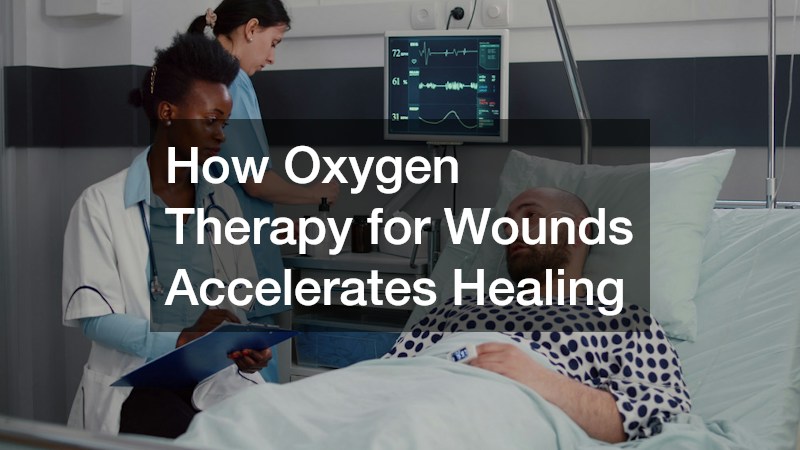

Chronic, non-healing wounds pose a serious health challenge for millions of people worldwide. Conditions like diabetic foot ulcers, venous stasis ulcers, pressure injuries, and post-surgical complications often stall during the normal physiological recovery cycle. When traditional dressings and standard wound management fail to produce progress, targeted cellular support becomes necessary. Among emerging clinical interventions, oxygen therapy for wounds has proven an effective modality for revitalizing dormant tissue, combating persistent infection, and accelerating closure.
The Biological Necessity of Oxygen in Tissue Repair
Wound healing requires significant cellular energy. The physiological repair process depends heavily on adenosine triphosphate (ATP), the primary energy currency of cells.
Aerobic cellular respiration produces roughly 18 times more ATP per glucose molecule than anaerobic pathways. When tissue is wounded, microvascular supply is damaged, creating a localized state of hypoxia (low oxygen).
While brief hypoxia signals initial inflammatory responses, sustained hypoxia stalls healing. Fibroblasts need oxygen to synthesize stable collagen matrices and build tensile strength across the wound bed. Without adequate oxygenation, endothelial cells cannot drive angiogenesis—the formation of essential new capillaries. Furthermore, immune cells such as neutrophils and macrophages rely on oxygen to fuel the “respiratory burst,” a metabolic pathway that generates reactive oxygen species to eliminate harmful bacteria and clear debris. Supplying supplemental oxygen directly re-engages these stalled biological processes.
How Oxygen Therapy for Wounds Stimulates Stalled Tissue
Modern clinical applications of oxygen therapy for wounds work by delivering concentrated oxygen directly to damaged tissue or systemically to raise tissue oxygen tension. By saturating the local microenvironment, oxygen diffuses directly through open wound margins and permeable tissue.
This delivery provides several immediate benefits:
- Infection Control: Pathogenic bacteria, particularly anaerobic strains, thrive in poorly oxygenated tissue. Supplemental oxygen inhibits microbial proliferation and enhances white blood cell activity, thereby reducing bacterial bioburden and biofilm persistence.
- Capillary Formation: Increased tissue oxygenation stimulates vascular endothelial growth factors (VEGF), spurring new blood vessel networks that restore vital systemic circulation.
- Extracellular Matrix Formation: Elevated oxygen tension optimizes the activity of enzymes such as prolyl hydroxylase, ensuring durable collagen cross-linking that prevents fragile, easily disrupted scar tissue.
- Edema and Inflammation Reduction: Active protocols that combine localized oxygen with cyclical pressure dynamics help mobilize interstitial fluids, mitigating localized swelling that restricts microvascular blood flow.
Practical Application: Protocols, Setup, and Patient Experience
A major advancement in modern wound care is the ability to administer targeted oxygen therapy directly in outpatient or home settings. Advanced systems utilize dedicated extremity chambers or topical multi-patch enclosures, paired with automated oxygen delivery units, to treat localized ulcers on the feet, lower legs, or the torso.
During an active session, the patient comfortably sits or reclines with the limb elevated. A single treatment typically lasts 60 to 90 minutes, depending on physician recommendations. Before beginning, patients ensure that loose items, fluids, and reading materials or entertainment are within reach to maintain a restful position throughout the session.
Preparation is straightforward:
- Safety Protocol: Because oxygen supports combustion, sessions must always occur in environments free of open flames, lit candles, gas fireplaces, or smoking materials.
- Dressing Compatibility: The treatment frequently works directly over gas-permeable wound dressings, compression wraps, or total contact casts (TCCs), eliminating the need for disruptive dressing changes prior to each session.
- Application & Monitoring: The chamber or patch is secured around the limb or affected site and connected to the controller via delivery tubing. Once initiated, the system delivers humidified, concentrated oxygen alongside cyclical pressure, ensuring a painless, soothing therapeutic experience.
Clinical studies show that using targeted topical oxygen dramatically increases the rate of full wound closure, reduces recurrence rates over long follow-up periods, and significantly reduces the risk of severe complications such as amputation or unplanned hospitalization.
Stop Waiting, Start Seeing Results
If you or a loved one is struggling with a chronic, non-healing ulcer, standard wound care alone may not be enough. Consult your physician or wound care specialist today to discuss whether advanced topical treatments from Advanced Oxygen Therapy, Inc. are right for your recovery plan. Visit their website or contact their clinical care team to learn how non-invasive, home-based oxygen technology can help restore your mobility and heal your wounds for good.